Division of Biological Sciences · University of Missouri

From spikes to transcripts: How circuits recover when their inputs don’t.

We study how neurons and networks balance plasticity with stability, and what happens to uninjured circuits when the inputs they depend on are lost. Our work combines electrophysiology, single-cell molecular profiling, and computational modeling.

Research

Plasticity and stability in small neural networks

Injury or disease in one part of the nervous system can reshape networks downstream that were never directly damaged. We ask how loss of input changes the properties of neurons within a network, and how those changes help, or hinder, recovery of function.

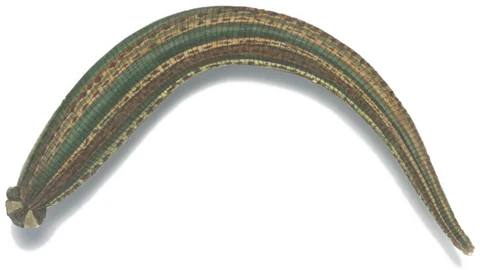
Illustration of the medicinal leech, Hirudo verbana 01

Recovery after injury

After complete transection of the nerve cord, the medicinal leech regains the ability to crawl even though the severed inputs never regenerate. We track changes in ion channel expression and dopamine sensitivity in the ganglia below the injury as locomotion returns.

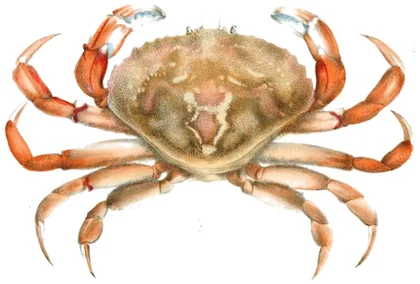
Illustration of a crab 02

Coordinated ion channel expression

Identified neurons in crustacean motor circuits keep the mRNAs for different ion channels in tight relationships. We study the cell-type-specific feedback that creates and constrains these correlations, and how activity reshapes them.

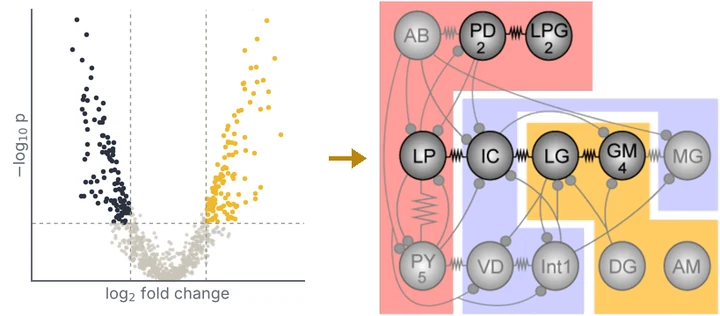
Volcano plot of differential gene expression beside a diagram of the stomatogastric ganglion circuit 03

From transcripts to circuit output

Single-cell RNA-seq and custom qPCR panels, paired with recordings from the same identified neurons, let us connect gene expression to excitability. Computational models test how conductance relationships produce stable network output.

ElectrophysiologyIntracellular and extracellular recordings and voltage clamp of identified neurons in intact networks.
Molecular profilingSingle-cell transcriptomics and quantitative PCR of ion channel and receptor genes.
Computational modelingBiologically constrained neuron and network models built from our own measurements.

Model systems

Medicinal leech · Hirudo verbana Crustacean stomatogastric ganglion Crustacean cardiac ganglion

People

The team

Our lab is part of the Division of Biological Sciences and the Interdisciplinary Neuroscience Program at Mizzou.

David J. Schulz DS

David J. Schulz, PhD

Principal Investigator · Director & Professor of Biological Sciences

David Schulz has been on the faculty at the University of Missouri since 2005. He is the Director of the Division of Biological Sciences and the Interdisciplinary Neuroscience Program. He received his PhD from the University of Illinois at Urbana-Champaign in 2001.

  • Provost’s Award for University Citizenship in Leadership (2024)
  • Fellow, American Association for the Advancement of Science (2019)
  • Ann K. Covington Award for Mentorship (2019)
  • William T. Kemper Fellowship for Teaching Excellence (2018)
AR

Arturo Rosete

PhD Student · Biological Sciences

Changes in ion channel expression in leech ganglia after nerve cord transection and during recovery of crawling.

arrrx@missouri.edu
AH

Ashlyn Holt

PhD Student · Interdisciplinary Neuroscience

Changes in dopamine sensitivity in the leech nerve cord during recovery of crawling after transection.

anh3v2@missouri.edu
MR

Dr. Murugesan Raju

Senior Research Associate

Leads the bioinformatics section of the lab and contributes molecular biology and conceptual expertise across all projects.

rajum@missouri.edu
SN

Dr. Swatantra Neupane

Postdoctoral Scientist

Leads RNAseq library construction and contributes molecular biology and conceptual expertise across projects.

snnz2@missouri.edu

Join the lab

We welcome inquiries from prospective graduate students, postdocs, and undergraduates interested in neural circuits, plasticity, and recovery after injury.

Get in touch

Publications

Selected work

A selection of recent and representative papers. The complete, up-to-date list is on Google Scholar.

  1. 2026
    Conductance relationships across compartments associated with bursting output in a model of a motor neuron in the crustacean cardiac ganglion Dopp DP, Samarth PS, Wang J, Kick DR, Schulz DJ. Journal of Neurophysiology 135: 686-704.
    DOI ↗
  2. 2024
    Distinct strategies regulate correlated ion channel mRNAs and ionic currents in continually versus episodically active neurons Viteri JA, Temporal S, Schulz DJ. eNeuro 11(11).
    DOI ↗
  3. 2023
    Motor neurons within a network use cell-type specific feedback mechanisms to constrain relationships among ion channel mRNAs Viteri JA, Schulz DJ. Journal of Neurophysiology 130: 569–584.
    DOI ↗
  4. 2019
    Molecular profiling of single neurons of known identity in two ganglia from the crab Cancer borealis Northcutt AJ, Kick DR, Otopalik AG, Goetz BM, Harris RM, Santin J, Hofmann HA, Marder E, Schulz DJ. Proc. Natl. Acad. Sci. U.S.A. 116 52: 26980-26990.
    DOI ↗
  5. 2019
    Membrane Voltage Is a Direct Feedback Signal That Influences Correlated Ion Channel Expression in Neurons Santin J, Schulz DJ. Current Biology 29: 1683-1688.
    DOI ↗
  6. 2016
    Deep sequencing of transcriptomes from the nervous systems of two decapod crustaceans to characterize genes important for neural circuit function and modulation Northcutt AJ, Lett KM, Garcia VB, Diester CM, Lane BJ, Marder E, Schulz DJ. BMC Genomics 17: 868.
    DOI ↗
  7. 2009
    Correlations in ion channel mRNA in rhythmically active neurons Tobin A-E, Cruz-Bermúdez ND, Marder E, Schulz DJ. PLoS ONE 4(8): e6742.
    DOI ↗
  8. 2006
    Variable channel expression in identified single and electrically coupled neurons in different animals Schulz DJ, Goaillard J-M, Marder E. Nature Neuroscience 9: 356–362.
    DOI ↗

Our research has been supported by the National Science Foundation (IOS-1856370) and the University of Missouri.